In the Lone Star State, barbecue is a sacred institution, and beef brisket is the undisputed crown jewel. Just as travelers quickly realize how big Texas is when traversing its endless highways, the state's appetite for legendary comfort food is just as immense. While Southern kitchens have long debated the origins of that famous Texas fried chicken, true barbecue pitmasters measure greatness solely by how tenderly they can coax flavor from a notoriously tough cut of beef. Across Central Texas, barbecue enthusiasts queue up before dawn outside legendary pit rooms from Lockhart toAustin just to secure a butcher-paper-wrapped slice of smoky, peppery beef that literally falls apart under its own weight. Producing genuineTexas brisket is not a quick weekend kitchen project or a simple recipe you can rush through, but rather an art form built on fire control, meat selection, patience, and seasoned wood smoke.
How to Select and Trim a Whole Packer Texas Brisket
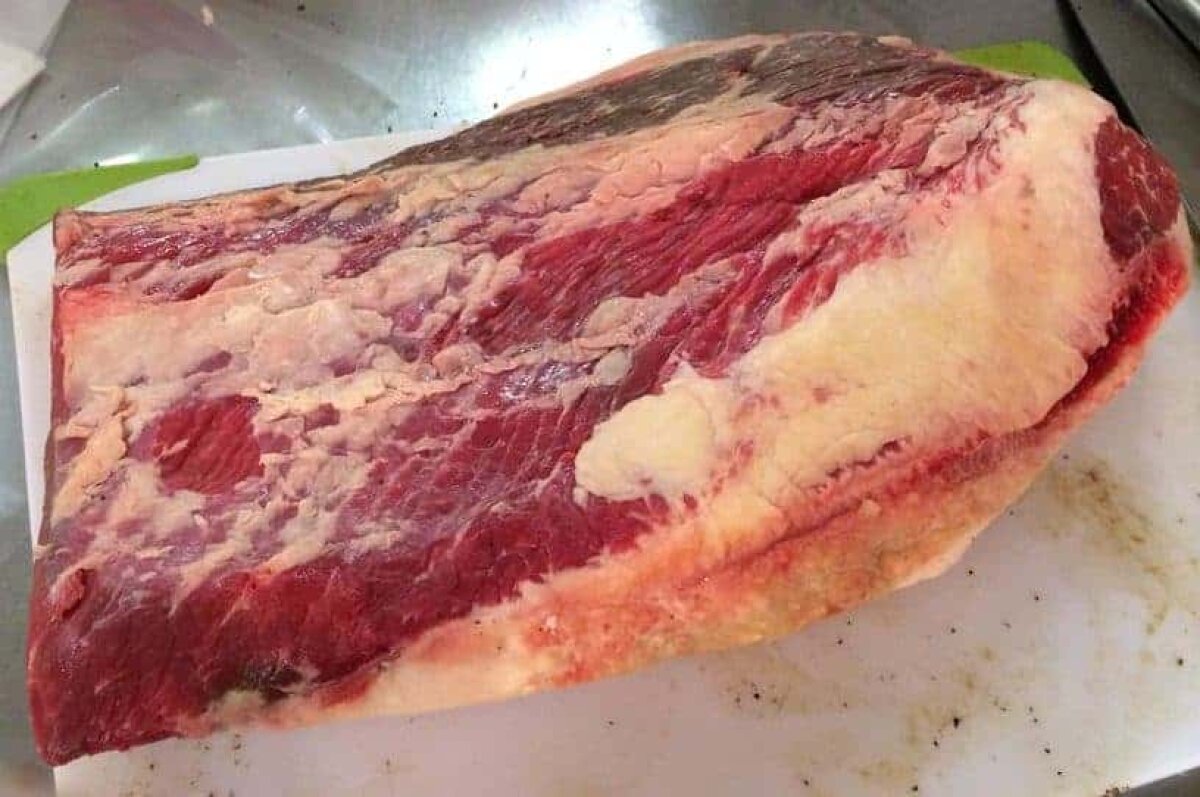
Whole packer beef brisket showing the lean flat and marbled point before trimming
Mastering this craft begins at the butcher counter with what is known as a whole packer brisket, which combines two distinct muscles bound together by a thick seam of fat. The leaner, broader section is known as the flat, while the thicker, heavily marbled, and fattier section sitting on top is called the point. Pitmasters always look for a whole packer cut graded USDA Choice or USDA Prime that features a generous, uniform flat so the ends do not dry out over a long cooking cycle. Before the meat ever sees smoke, careful trimming is essential. You want to slice away brittle hard fat that will never render, sculpt the shape into an aerodynamic oval that channels airflow cleanly across the surface, and shave the top fat cap down to an even quarter-inch thickness so the seasoned bark and rendering juices can baste the muscle throughout the smoke.
The Secret to the Traditional Texas Brisket Dalmation Rub
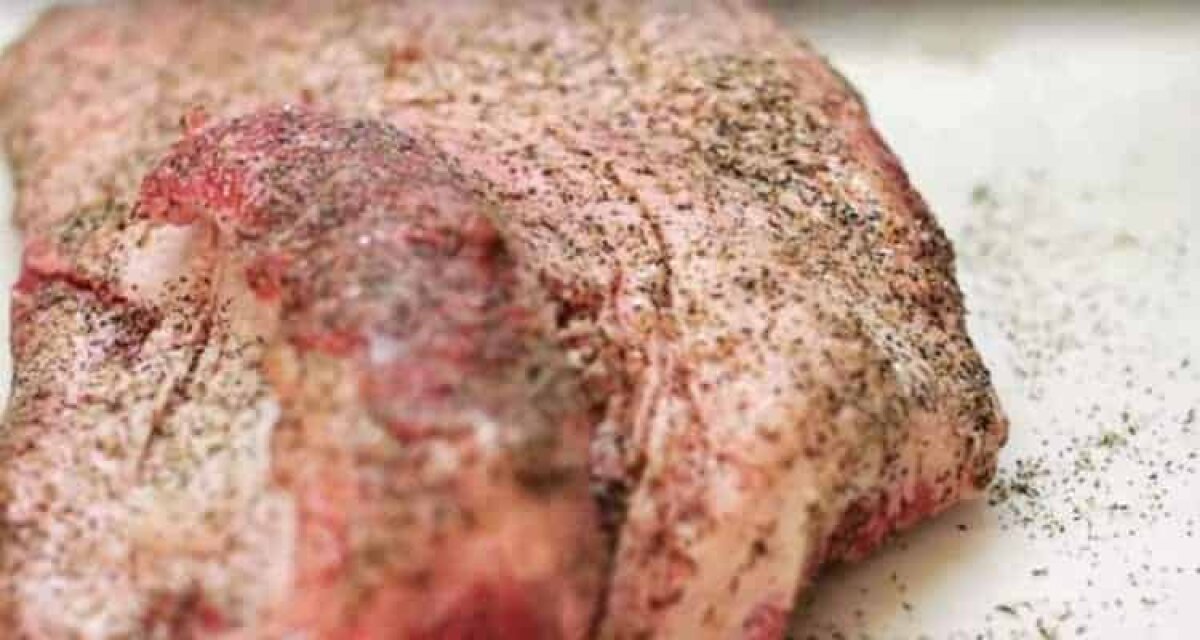
Applying coarse salt and black pepper Dalmatian rub to seasoned Texas brisket
Many backyard cooks assume authentic Texas brisket gets its depth from complicated sugary marinades or heavily spiced secret dry rubs, but traditional Central Texas barbecue rejects sweet flavor profiles entirely. True Texas-style brisket relies on what pitmasters call the Dalmatian rub, an ultra-simple blend composed almost entirely of coarse kosher salt and freshly cracked coarse black pepper. Using a coarse sixteen-mesh black pepper is essential because large pepper granules create physical texture and surface area, allowing the wood smoke to latch onto the meat and form that prized, crunchy, jet-black crust known as bark. A light touch of granulated garlic or onion powder is occasionally blended in, but sugar is strictly avoided because it scorches over a twelve-hour smoke and distracts from the pure, unadulterated flavor of smoke-kissed beef.
Selecting the Right Firewood and Managing the Smoke
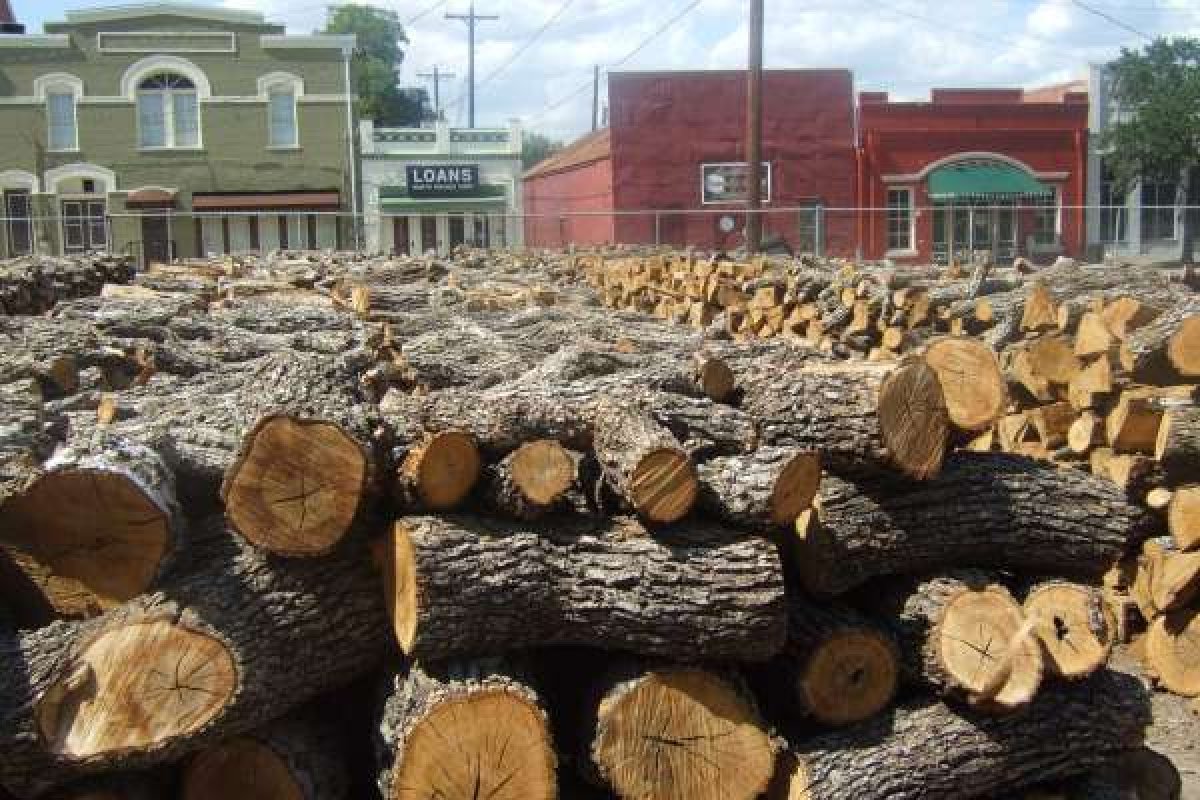
Split seasoned post oak firewood used for authentic Central Texas barbecue smoking
Fuel choice is the heart and soul of Texas barbecue, and seasoned post oak serves as the gold standard across the Hill Country and Central Texas. Post oak provides a mellow, sweet, and clean smoke flavor that enhances beef without turning harsh, acrid, or bitter over extended cooks. Wood must be thoroughly seasoned and dry, typically cured for nine to twelve months, because green timber smolders and produces thick white smoke that ruins the exterior of the meat. A clean fire burning hot coals and thin, nearly invisible blue smoke allows volatile wood compounds to create a delicate pink smoke ring beneath the surface without overwhelming the natural richness of the beef.
Protecting Moisture, Managing Airflow, and Conquering the Stall
Maintaining consistent chamber humidity and gentle airflow is critical during the initial phase of the cook. Offset smokers benefit greatly from a dedicated water pan placed near the firebox baffle to buffer harsh radiant heat and keep the surrounding air moist, which prevents the outer edges of the brisket from drying out before internal connective tissues can dissolve. As the meat develops its dark exterior crust over the first several hours, pitmasters regularly spritz the drier outer edges with a simple mixture of water, apple cider vinegar, or Worcestershire sauce. Around the six-hour mark, every cook confronts the infamous barbecue stall, an agonizing period where evaporative cooling causes the internal temperature of the meat to plateau around one hundred and fifty to one hundred and sixty-five degrees. Maintaining calm fire management during this phase allows the meat to naturally push through without searing or drying the lean flat.
The Texas Crutch: Wrapping in Pink Butcher Paper at the Peak of Bark
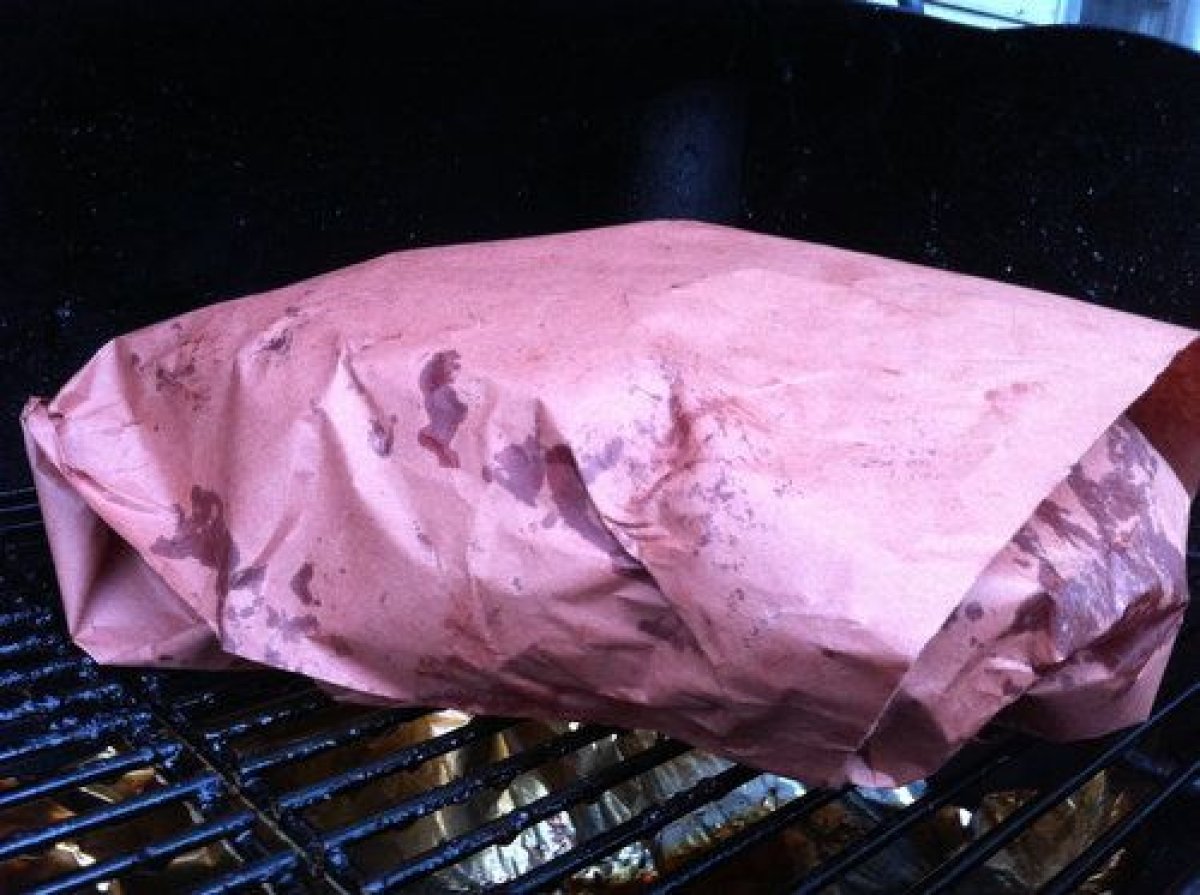
Wrapping smoked brisket tightly in peach butcher paper to preserve bark and retain moisture
Once the bark has fully set into a deep mahogany black and does not rub off when lightly pressed, it is time to deploy the classic Texas crutch by wrapping the meat tightly in un-waxed pink butcher paper. While aluminum foil traps steam too tightly and can turn a crispy bark soft and mushy, porous butcher paper strikes the perfect balance by breathing just enough to preserve the crunchy exterior while holding in rendered fat to accelerate the remaining cook time. The wrapped brisket returns to the smoker until the thick collagen and tough connective tissues melt into pure gelatin. Texas brisket is finished not by a strict timer, but by feel, which typically happens when an internal meat probe glides into the thickest part of the flat with the effortless resistance of warm butter, usually between two hundred and two hundred and five degrees Fahrenheit.
Resting and Slicing Texas Brisket Against the Grain
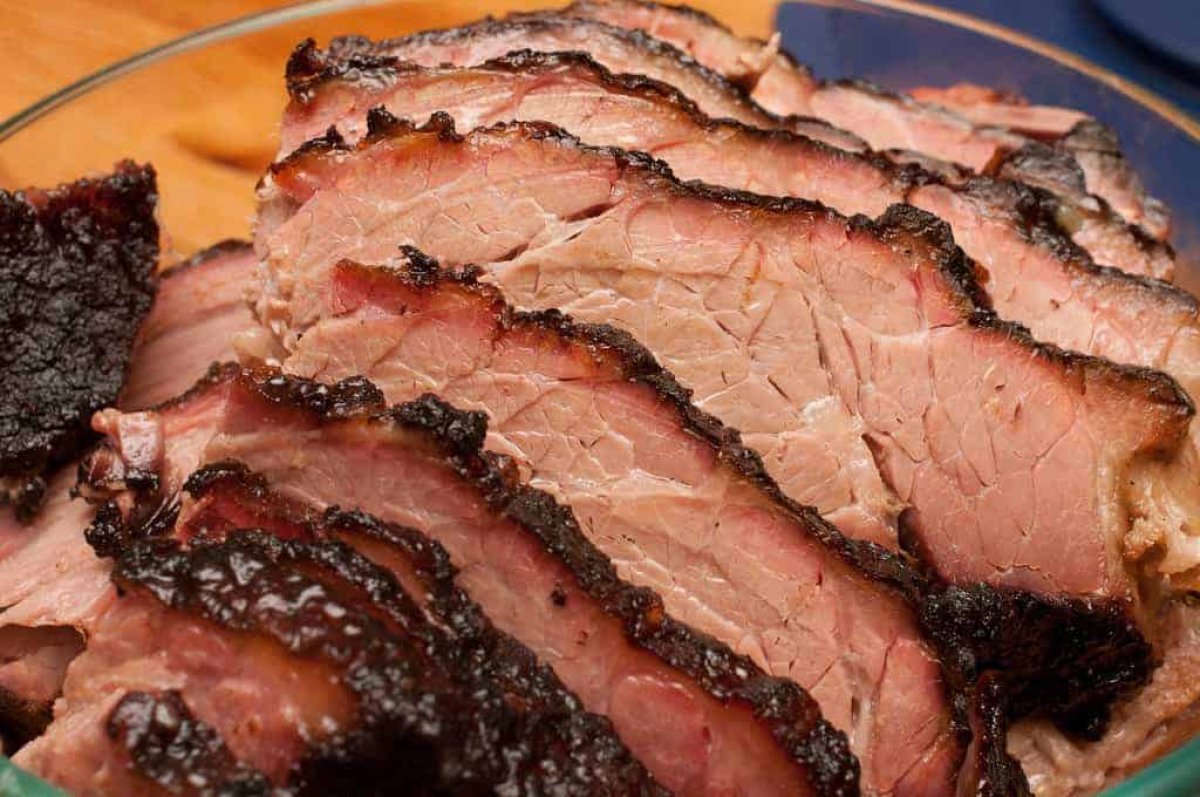
Slicing tender smoked Texas brisket against the grain with visible smoke ring and bark
Resisting the urge to cut directly into a freshly pulled brisket is what separates seasoned pitmasters from novices. A cooked brisket must rest inside an insulated cooler or holding cabinet for at least one to two hours, allowing hot expanded muscle fibers to relax and reabsorb rendered internal juices throughout the cut. When it is time to serve, slicing technique is paramount. The lean flat and the marbled point run with their muscle grain in opposite directions, requiring you to slice the flat against its grain into pencil-thick strips, separate the point muscle, rotate it ninety degrees, and carve the fattier deckle into rich, succulent bites. Paired with a stack of white bread, sliced onions, pickled jalapeños, and an ice-cold beverage, you are left with the authentic taste that defines Texas culinary tradition.
Sign In Required
This feature is reserved for our members. Please sign in to continue.
Welcome Back
Registration is currently closed.
Create Account
New registrations are currently closed. If you already have an account, please sign in.
Reset Password
Enter your email address and we'll send you a link to reset your password.
We use cookies to improve your experience and analyze site traffic. By clicking "Accept All", you consent to our use of cookies.
Read our Privacy Policy.