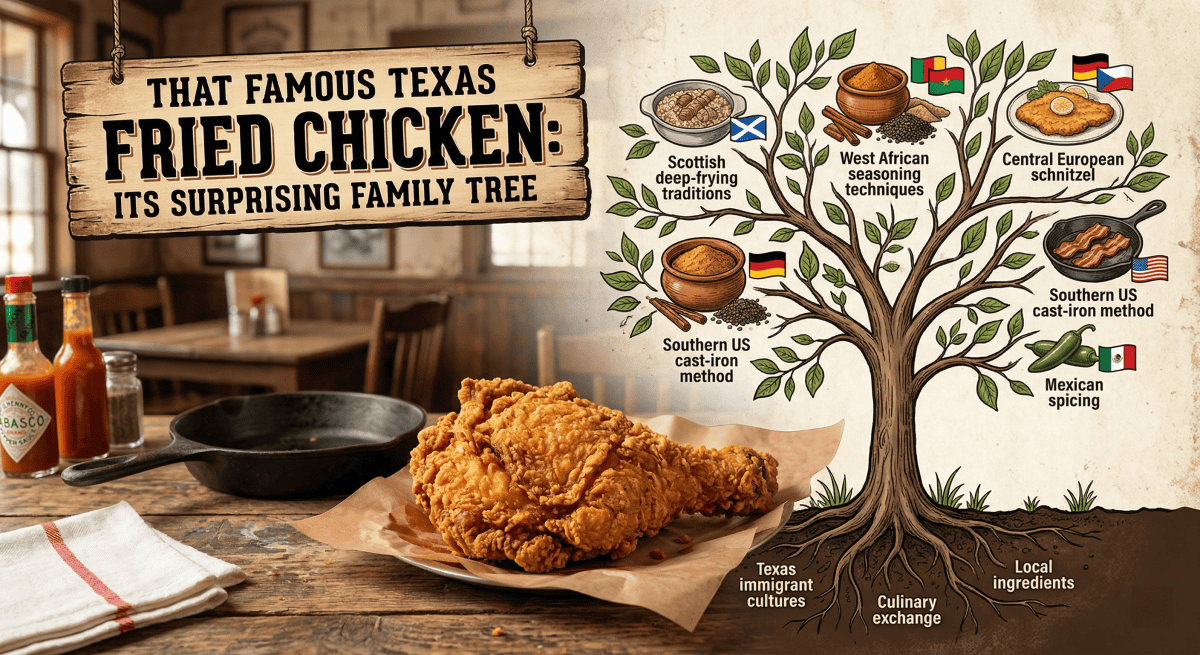
Close your eyes for a second and picture it: the sizzle of hot oil, the warm, comforting scent of seasoned flour, that utterly satisfying first bite that shatters into a million crunchy pieces. Texas fried chicken. It’s practically an icon, a symbol of home-cooked goodness, bringing to mind checkered tablecloths and a generous, no-apologies approach to flavour. We heartily claim it as our own, a true Texan staple. But, as with so many things we consider uniquely Texan, the story is a bit more complicated than a simple Sunday dinner.
When we talk about ‘Texas fried chicken,’ we’re usually picturing a hearty bird, often pan-fried or cooked in a Dutch oven. It’s usually heavily seasoned, with a crust that can stand up to pretty much anything. This is the chicken you find in old-school diners and at backyard barbecues. Yet, the path this beloved dish took to get onto our Texas tables is a much more intricate tale, one that hints at faraway places, clever cooking tricks, and a culinary heritage that was already well-established long before it arrived in the Lone Star State.
The Memory of Texas Fried Chicken
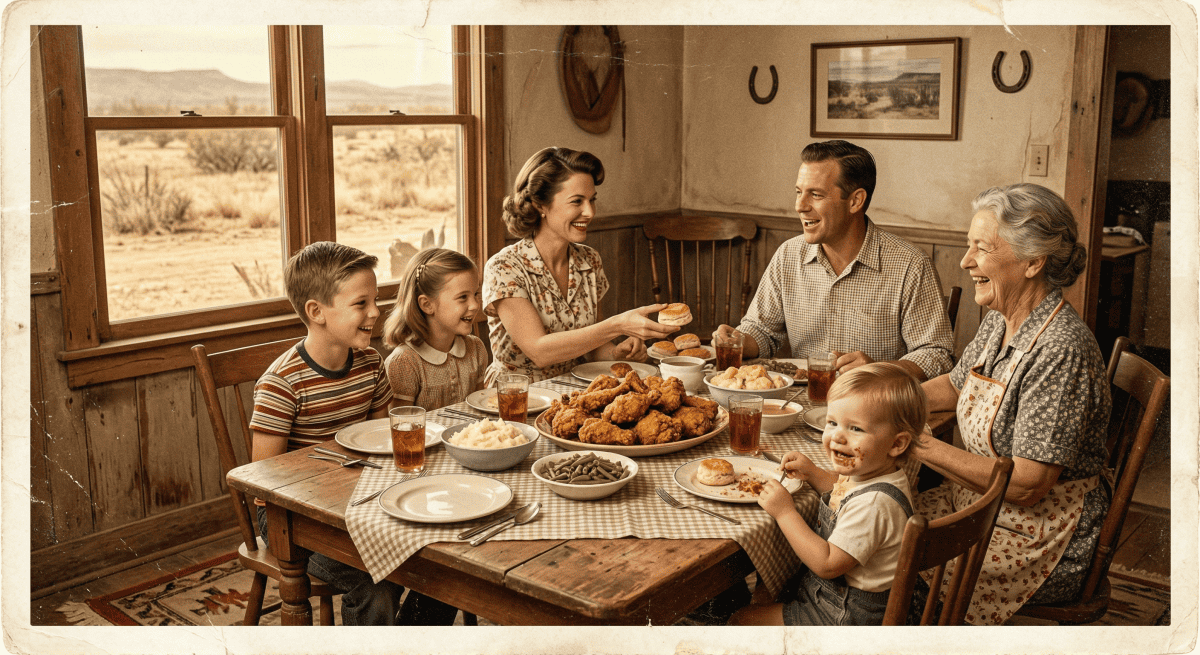
Nostalgic image of a family enjoying fried chicken at a mid-20th-century Texas-style dinner table.
The idea of Texas fried chicken is strong. It’s a no-fuss dish that perfectly captures the state’s independent spirit. It’s what fuels road trips, brings families together, and shows up faithfully at every potluck. We remember it from our childhoods, from roadside cafes with their bright neon signs, from grandmothers who ruled their kitchens with cast-iron skillets. This shared memory is powerful, cementing its place in our hearts as something truly Texan. But memories, while lovely, don’t always tell the whole story. That crisp, golden skin we love so much has a lineage that might surprise even the most devoted chicken fan.
Texas Was Cooking Long Before the Deep Fryer
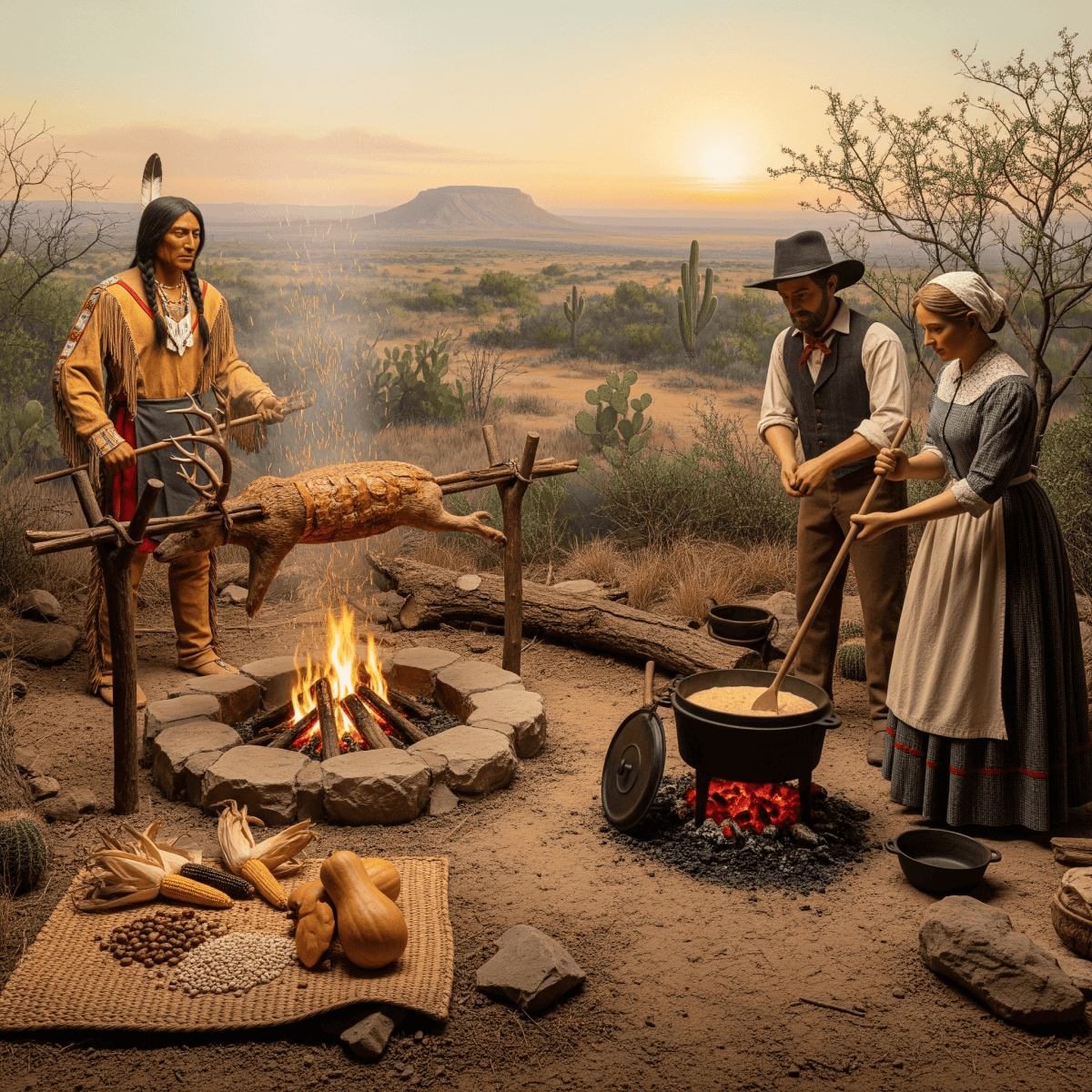
Early Texan cooking scenes depicting Native American and settler methods alongside a campfire.
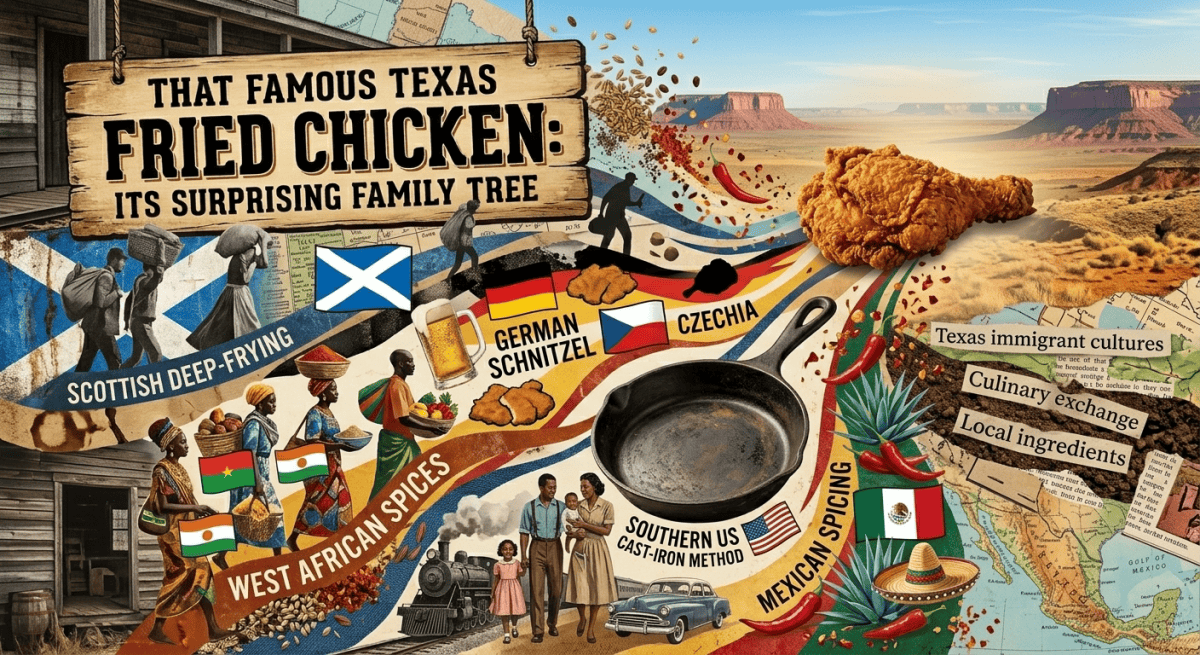
Before the deep fryer became a standard kitchen fixture, cooking in Texas was a skill passed down through generations. Native Americans relied on game, usually roasted or stewed. Early European settlers brought their own cooking methods , a love for slow-cooked meats, simple baking, and using lard for flavour and frying. The vast plains offered plenty of opportunities for hunting and raising livestock. Still, that distinct method for achieving perfectly crispy, outrageously good fried chicken wasn't immediately a Texan invention. The basics were there, the ways of preparing poultry were in place, but the key elements that define what we now call *Texas* fried chicken were still taking shape, influenced by a mix of cultures and traditions.
A Southern Connection
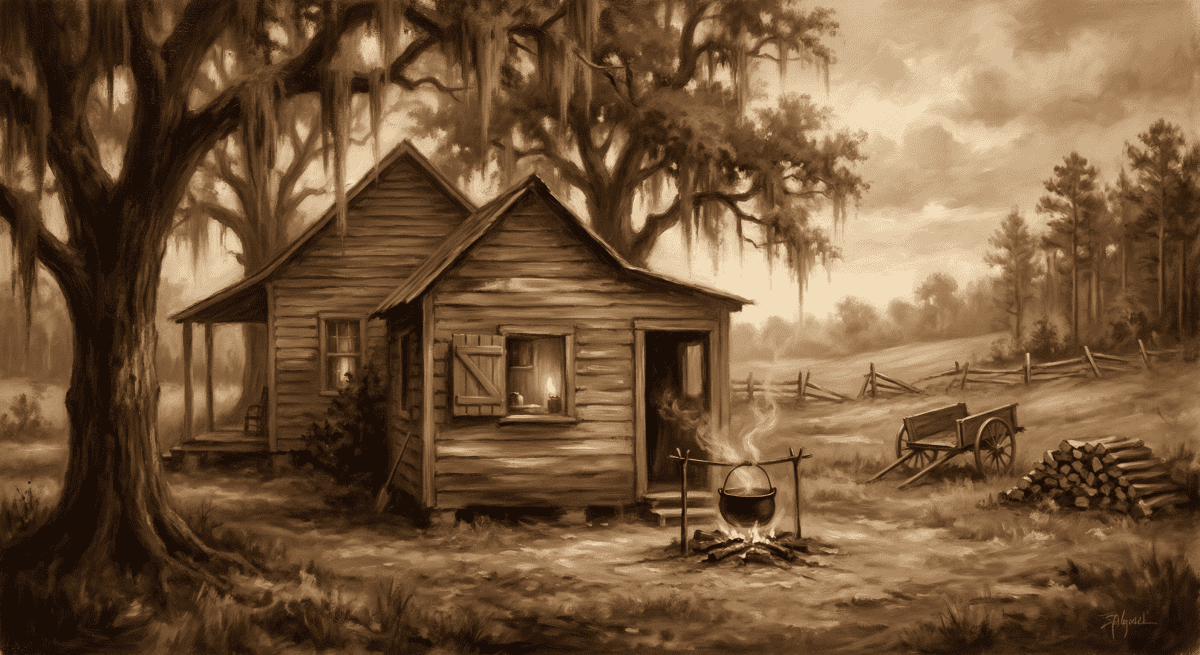
Evocative sepia-toned depiction of a Southern landscape hinting at culinary traditions.
The journey of fried chicken to becoming a star dish in America, and therefore in Texas, is deeply tied to the American South. While different cultures fried food, the widespread popularity and refinement of fried chicken owe a great deal to the culinary traditions that came ashore with enslaved Africans. These weren’t just random food choices; they were sophisticated preparation techniques developed out of necessity and inventiveness when resources were extremely limited. The South, with its farming heritage and growing food culture, became the ideal place for these traditions to flourish, eventually spreading westward.
African American Cooking Genius
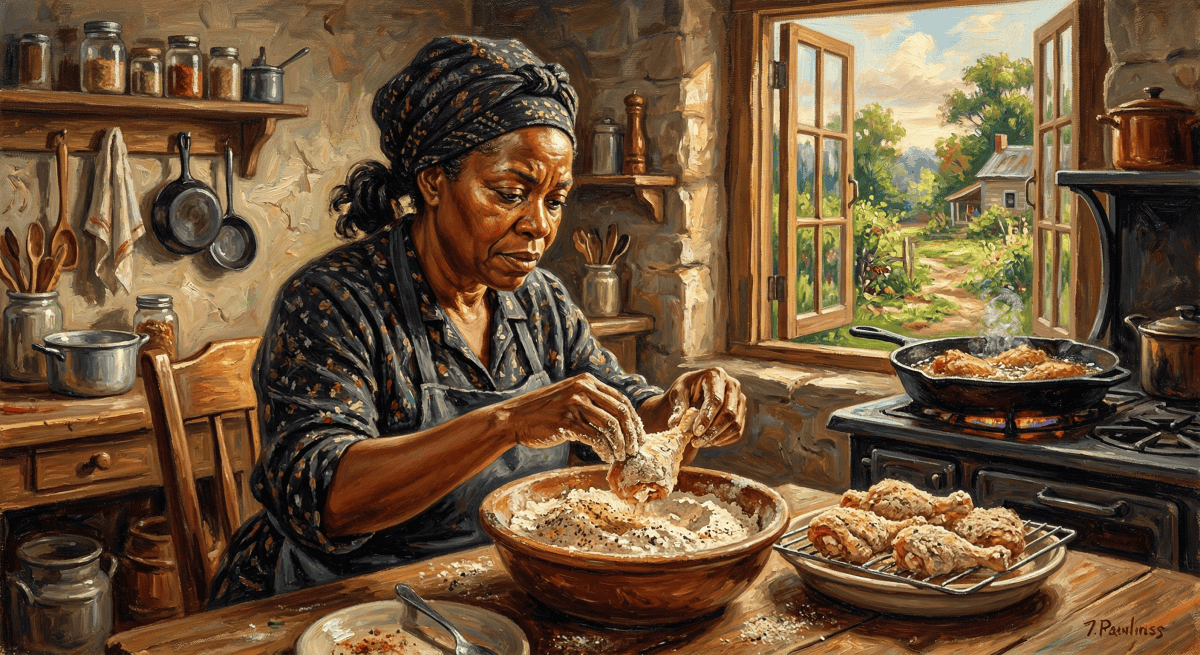
Painting of an African American woman expertly preparing seasoned flour-dredged chicken.
This is where the story gets really interesting. The techniques that would come to define American fried chicken , getting the flour just right, controlling the frying temperature, achieving that perfect crunch while keeping the chicken juicy , were largely fine-tuned and made popular by African Americans. Enslaved people were often responsible for cooking, and in a system where ingredients were scarce, they showed remarkable resourcefulness. They figured out how to make tougher cuts of meat tender by frying them, a method that might have been new to some European cooking styles. They mastered the use of available spices and fats to create incredibly flavourful and textured dishes. This cooking knowledge, passed down through families, became a vital part of Southern food, and it eventually made its way to Texas, carried by the very people who had perfected it.
The Cast Iron Skillet's Role
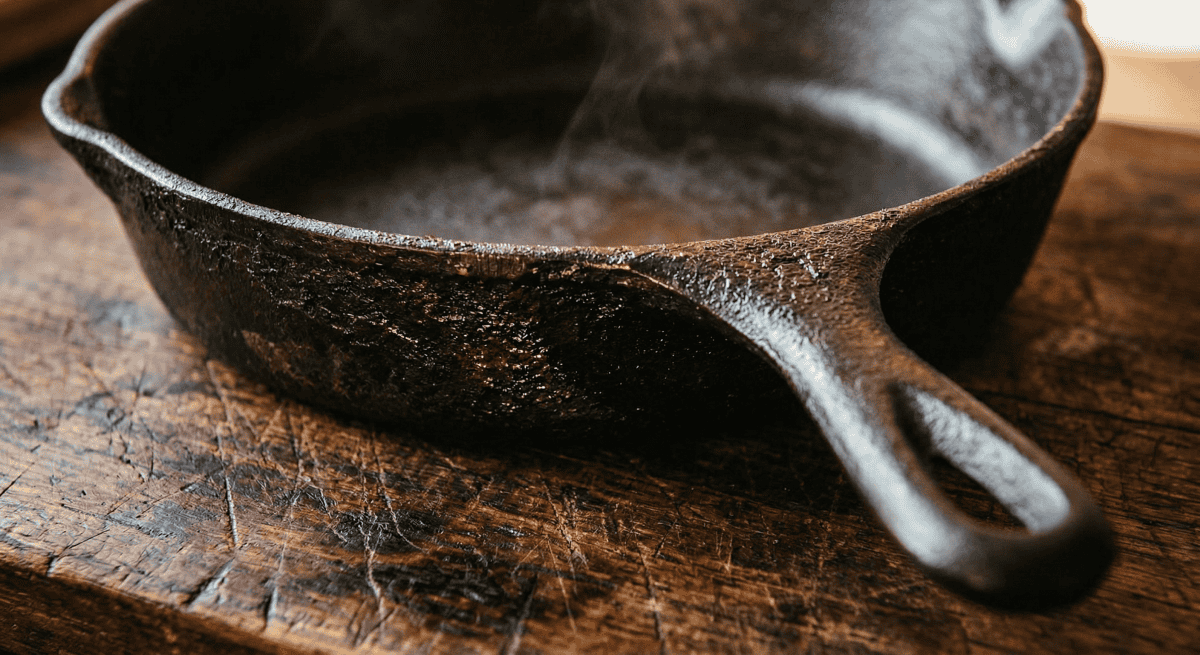
Close-up of a well-seasoned, heavy cast-iron skillet, hinting at culinary history.
The cast-iron skillet is undeniably crucial to the fried chicken story. For ages, it was the backbone of any kitchen, its remarkable ability to hold and distribute heat essential for achieving that signature crisp. In Texas, where cooking outdoors and making do with what you had were common, cast iron was king. Picture it: a heavy skillet over an open fire, or on a wood stove, with melted lard shimmering. This was more than just cooking; it was a performance. The careful dredging of chicken pieces, the cautious addition to the hot fat, the patient turning to ensure even cooking and that all-important golden colour. This cast-iron workhorse became the stage for a culinary transformation, turning simple poultry into a celebrated dish through skill and patience.
From Home Kitchens to Diner Counters
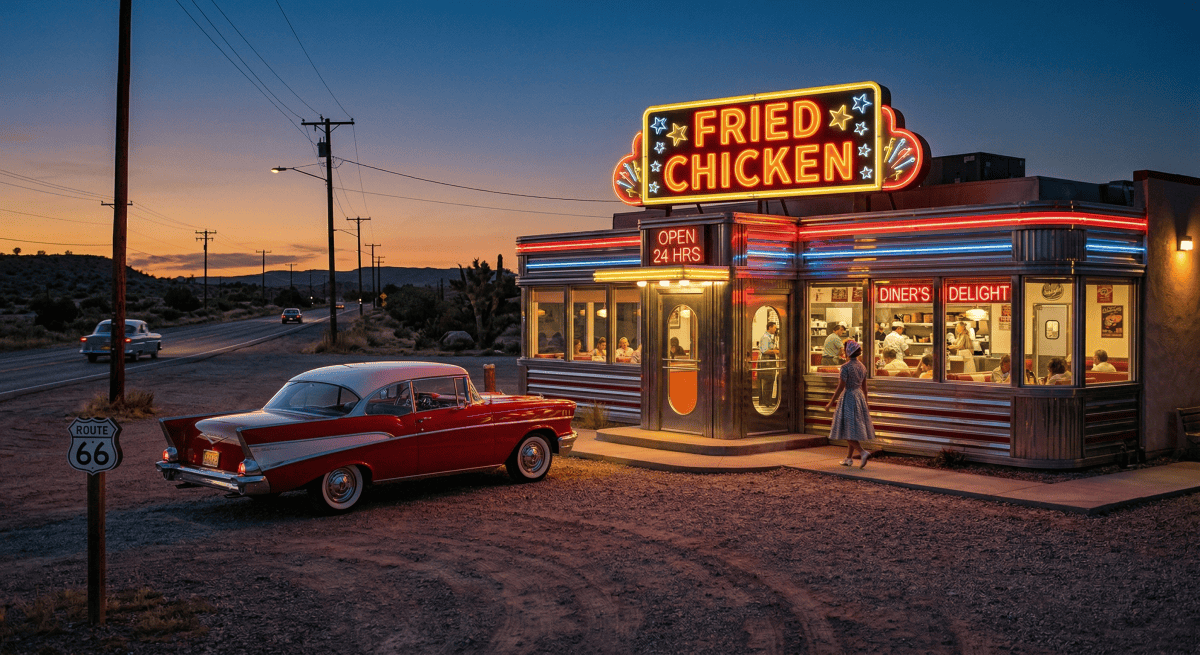
Classic 1950s diner exterior with a neon sign for 'Fried Chicken' on a roadside highway.
As the 20th century began, fried chicken started making its way out of private homes and into the public eye. Diners and cafes, appearing along highways and in busy towns, recognised how much people loved this comforting dish. Chicken was readily available, and the perfected frying methods meant it was a perfect meal for hungry travellers. Early diners weren't just serving food; they were offering a taste of home, a bit of tradition. This transition was particularly evident in Texas. As the state’s population grew and its roads improved, these roadside eateries became important stops, and their fried chicken, often made using those time-tested Southern techniques, began to be associated with Texan hospitality and a certain down-to-earth deliciousness.
The War Years and Restaurant Chains
Stylized vintage-inspired poster depicting families enjoying fried chicken during a post-WWII era.
World War II significantly boosted the popularity and spread of fried chicken. With rationing on other meats and a growing need for easy, energy-filled food for soldiers and workers, chicken moved to the forefront. After the war, the rise of restaurant chains took advantage of this surge in popularity. Businesses saw the potential for a well-liked product that could be made consistently. This period saw many fried chicken recipes become more standardized, leading to brands that brought fried chicken to an even wider audience across the country. While not exclusively a Texan phenomenon, this national trend certainly influenced how fried chicken was viewed and made in the state, further cementing its status as a mainstream American favourite.
Southern Traditions on the Move
Collage representing migration with silhouettes of travelers and culinary elements.
The Great Migration and other movements of people from the South brought with them deeply ingrained culinary traditions. As African Americans moved to cities and explored new opportunities, they brought their cooking with them, including their expert fried chicken. Likewise, other Southerners, regardless of their background, carried their regional dishes to new areas, including Texas. This cultural exchange meant that what was once a distinctly Southern food became a national comfort food, quickly adopted and adapted by new communities. Texas, being a major destination and a hub for travel, absorbed these culinary influences, blending them with its own developing identity to create its unique version of fried chicken.
What Else Makes It Texan?
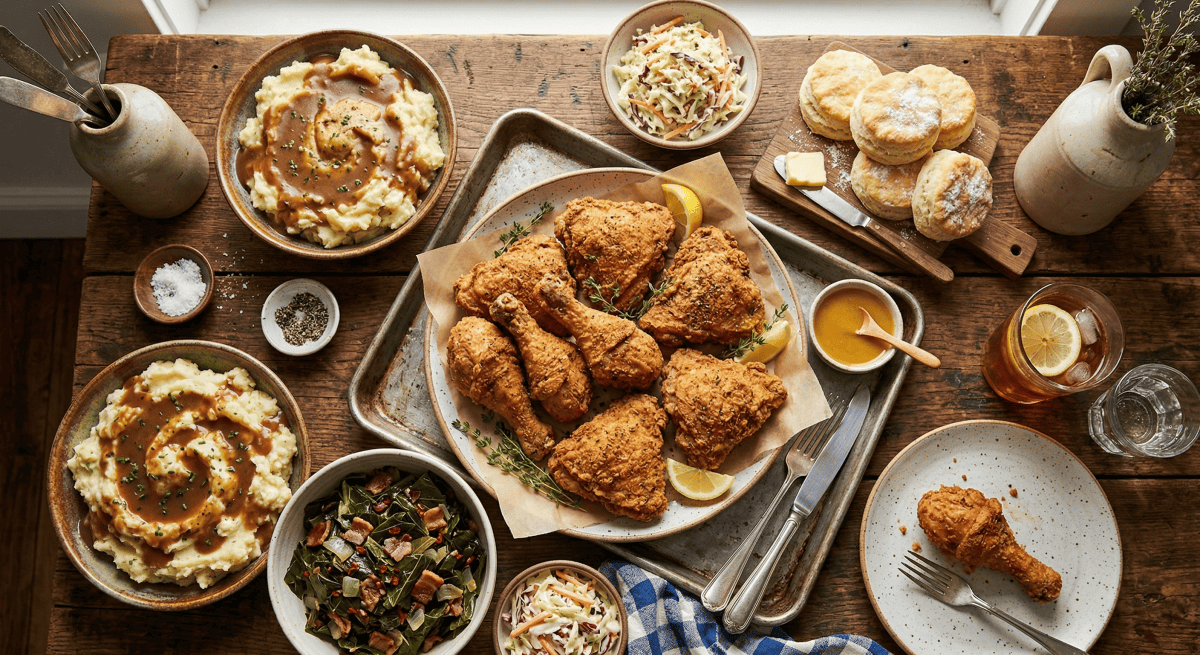
Overhead shot of a generous Texas-style fried chicken meal spread with traditional sides.
So, if the main cooking method isn't exclusively Texan, what makes *our* fried chicken feel so distinctly ‘us’? It’s in the small details, the subtle touches that chefs and home cooks have added over time. Is it the specific blend of spices in the flour , maybe a pinch of cayenne or paprika for a little heat? Is it the choice of fat , a preference for beef tallow or a mix that adds a certain richness? Or is it the cut of the chicken itself, the generous portions that reflect Texas’s tradition of big-hearted hospitality? The side dishes matter too: creamy mashed potatoes, collard greens, fluffy biscuits, and, of course, that essential, often tangy, honey-mustard dipping sauce. It’s in this specific combination, this Texan stamp on a beloved classic, that the dish truly finds its Lone Star identity.
The Legend Continues
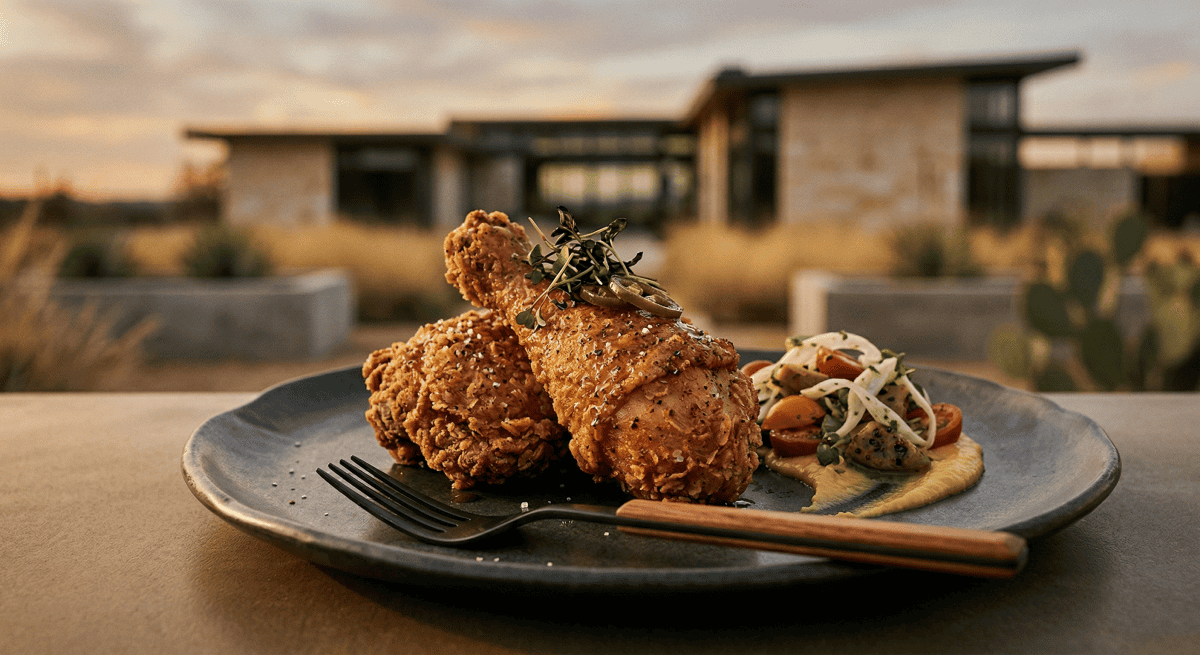
Artistic modern photograph of a perfectly plated piece of Texas fried chicken, suggesting evolution.
The legend of Texas fried chicken is well-deserved and firmly rooted. It’s a dish that has changed over time, taking on influences and adapting to new tastes, while still delivering that core promise of delicious, satisfying comfort. From its origins in complex culinary traditions to how it’s made today, it’s a reminder of how food connects us to our history, our culture, and each other. Whether it’s the perfectly spiced crust from a family recipe, the delightful crunch from a roadside stop, or a fancy twist on a classic, that ‘authentic’ Texas fried chicken continues to be a source of pride and a deeply cherished part of our food culture. The plate might change, but the craving for that golden crunch? That, bless its heart, is here to stay.
Sign In Required
This feature is reserved for our members. Please sign in to continue.
Welcome Back
Registration is currently closed.
Create Account
New registrations are currently closed. If you already have an account, please sign in.
Reset Password
Enter your email address and we'll send you a link to reset your password.
We use cookies to improve your experience and analyze site traffic. By clicking "Accept All", you consent to our use of cookies.
Read our Privacy Policy.